The most recent bicycle counts from two of America's most progressive cities, New York City and Portland, have been made public. The results are impressive as much as they are instructive.
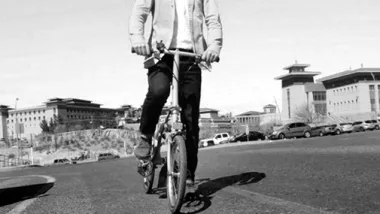


The most recent bicycle counts from two of America's most progressive cities, New York City and Portland, have been made public. The results are impressive as much as they are instructive.
With a 35% increase in measured bicycle trips, New York City has effectively doubled bicycle ridership in six years. Several socio-economic and cultural factors may be spurring Gotham's ascension as the east coast's most bicycle-friendly city: High gas prices, increasingly crowded subway cars and buses and environmental concerns. Not to mention a growing culture of velophiles interested in convenience, staying fit, cycle cool and simply having an enhanced connection to the city in which they live.
Yet the continued rise in ridership would not be occuring without the City's commitment to expanding its bicycle infrastructure. Bicyclists need to feel safe through an easily identifiable and connected bikeway system. By adding hundreds of miles of bicycle lanes, New York City is doing exactly that.
For personal reasons, I now visit New York City every month and am increasingly impressed by the growing number of bicycle lanes, sharrows, bicycle boxes and the City's general 'complete streets' approach towards some of their more hostile thoroughfares. The redesign of the Broadway, Fifth Avenue and Madison Square area provides an excellent example, as a former auto sewers now accomodates bicyclists safely and encourages people to linger within new plazas. For this, the work of NYC's DOT is nothing short of revolutionary. Streetsblog, one of New York City's leaders in the Livable Streets movment has even deemed the NYC DOT the most progressive public agency in the country. To learn more about the their initiatives, watch this recent Streetfilms interview with New York City DOT Commissioner, Janette Sadik-Khan. Beautiful work.
To be sure, bicycle parking remains unnecessarily difficult, and bicycling still comprises less than 1% of commuter mode share. However, the city is quickly adapting itself to the requirements of the 21st century. Keep at it NYC!
As for Portland, their reign as America's most bicycle-friendly big city continues. Unlike New York City, Portland has been investing in their bicycle infrastructure for decades.The result being that Portland is one of two Platinum rated bicycle-friendly cities, as determined by the League of American Bicyclists.
This year Portlanders can be proud because they are bicycling 28% more than they were in 2007, according to Bike Portland. Bicycle mode split is now at 8%. A far cry from the near 40% split in Amsterdam and Copenhagen, but impressive nonetheless.
Perhaps what is most interesting is how Portlanders bicycle. Jennifer Dill's latest research demonstrates that 51% of bicycle trips are taken on the 8% of city streets that contain some type of bicycle infrastructure (Lanes, Sharrows and bicycle boulevards). If 8% of streets can get 8% of the population bicycling, then we can likely expect a commensurate rise in the years to come as Portland continues to implement its bicycle master plan.
In short, a clear relationship exists between the expansion of bikeway infrastructure, daily ridership and safety. As demand rises, American cities are doing more to accomodate this squeaky clean mode of transport. In turn, more people are bicycling while bicycle related injuries are not rising proportionately--a so-called 'virtuous cycle.'
The question remains, however, will it last?
Picking up David Herlihy's Bicycle:The History will inform you that bicycling in America has historically been a boom and bust phenomenon. History notwithstanding, the confluence of many interconnected environmental, social and economic realities could mean that this current trend could hold, especially since some American cities have never before provided so much bicycle specific infrastructure. Moreover, the American love affair with automobility may be coming to a close as even our three largest auto companies struggle to adapt their mid-20th century business models to a 21st century world. Of course, cars are not going to disappear from our streets. But did you know that bicycle sales have never been higher?! See this article from the Economist, which demonstrates bicycle sales far exceed automobile sales.
In the end, there is not a cheaper, faster or more pleasant way to experience a city. I say if you are willing and able, trade four wheels for two.

America's Best Bike Cities
With gas prices at an all time high, bike riding has never looked better. Shermans Travel identifies the top cities to bike through, noting a bounty of amenities to save on costs for the urban biker.
Analysis of Downtown Recoveries Reveals Post-Pandemic Winners and Losers
The recovery of U.S. downtowns is happening at widely different paces depending on which city you consider.
Brooklyn Bridge Bike Path Could Be Wider, Safer
Advocates want to see a safer plan for the proposed two-way path on one of the country's busiest commuter corridors.

Planetizen Federal Action Tracker
A weekly monitor of how Trump’s orders and actions are impacting planners and planning in America.

Colorado’s Largest Data Center Could Rise Next to Homes — Without a Public Hearing
The proposed campus would consume 11 times the power of Denver International Airport; as it has across the country, opposition mounts.

US to reduce Colorado River water deliveries to Mexico
A new Colorado Treaty amendment reduces Mexico’s Colorado River water allocation by 250,000 acre feet.

'This is going to be painful:’ Virginia stares down $1.7 billion funding gap for highway maintenance
The state may address the deficit by shifting $290 million from its construction budget to maintenance projects.

Judges permit Denver to divert 77,000 acre feet from the Colorado River for reservoir expansion
Overuse and climate change have caused the Colorado River’s water levels to plummet.

Amtrak, CN end decades-long dispute with eight-year agreement
The new operating agreement establishes an updated framework for the companies to work together, including processes to resolve disputes.

FREE Course: Walkable City 1: Why Walkability?
After describing his path towards focusing on walkability as the essence of good planning, Jeff Speck marches through his five principal reasons for making more walkable places.
Reinventing Malls: Planning Alchemy—Turning Gray Fields Into Gold
The course focuses on the opportunities and imperatives that shape reinvention of mall sites.

KFH Group Inc.
Greater Baltimore Committee
Eagle County Government
The Architects Foundation
University of Cincinnati Online
The Pocatello Development Authority
The Urban Renewal Agency of the City of Pocatello

